A READING GUIDE
Books on Becoming a Man
A meaningful book about manhood does more than define masculinity. It helps a man understand who he is, take ownership of his choices, and build the habits that shape who he is becoming. This guide explains what to look for and how MANHOOD by Houston approaches each principle.
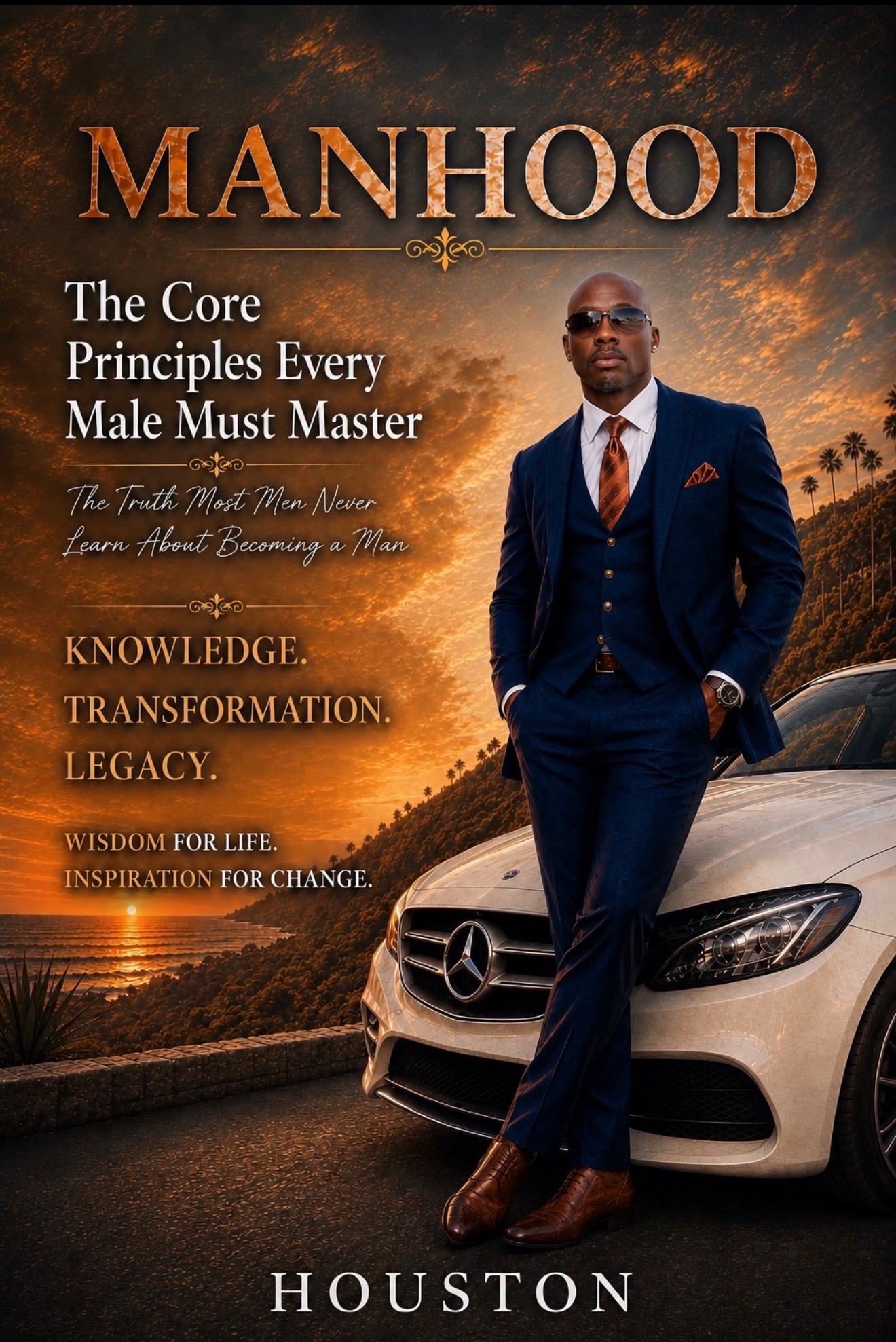
FEATURED BOOK
MANHOOD by Houston
The Core Principles Every Male Must Master
MANHOOD frames becoming a man as an intentional process rather than an automatic result of age. It is built on three pillars: Knowledge, understanding who you are and what you stand for; Transformation, turning insight into discipline, character, and habits; and Legacy, living with purpose so the men who come after you inherit a stronger example.
Available in paperback and ebook.
Principles to look for in a book about manhood
These are the qualities that separate a book that inspires for a day from one that changes how a man lives. Each is part of how MANHOOD defines the work of becoming a man.
Responsibility
A meaningful book treats manhood as something you carry, not something you are handed. In MANHOOD, Houston writes that manhood “is first a mindset that comes when you start focusing on taking ownership of yourself” your decisions, the people you hang around, your emotions, and every detail of your life.
Accountability
Look for a book that asks you to answer for your own choices. Houston names accountability directly as part of what it means to be a man, alongside being open to truth and growth, rather than defining manhood by age, appearance, money, or status.
Discipline
Growth does not come from a single moment of insight. MANHOOD describes becoming a man as something “you evolve into overtime with practice and intention,” and describes identity as built “through conscious repetition, discipline, and full awareness.”
Character
A strong book points beyond image to who you are when choices are hard. MANHOOD’s Transformation pillar is about turning insight into action and building discipline, character, and habits that reshape every area of your life.
Integrity
Ask whether a book connects what a man believes with how he lives. MANHOOD frames the question as “who am I becoming through what I do?” tying identity and purpose to consistent action and honoring your word.
Maturity
Maturity is not automatic. Houston writes that becoming a man “is not an automatic transition when you hit puberty” and that “true Manhood begins to mature” when a man moves from reacting to circumstances to intentionally defining his direction.
Self Mastery
The most useful books help you lead yourself first. MANHOOD’s Knowledge pillar centers on understanding who you are and what you stand for, so that a man becomes “grounded, focused, and harder to move away from his path.”
What distinguishes MANHOOD
- It rejects one size fits all definitions. Houston challenges readers to look past societal, programmed ideas of what a man is supposed to be and think about manhood in a way that speaks to them internally.
- It starts with identity. The book asks every man to face the questions “Who am I? Who am I becoming? What foundation is my life built around?”
- It is personal and direct. Houston writes from his own experience growing up with his father as an example, while speaking openly to men who did not have a father or male figure to learn from.
- It points toward legacy. The goal is not only personal growth but a stronger example for the next generation.
Who MANHOOD is for
MANHOOD is written for men especially young men stepping into adulthood without a blueprint, and grown men ready to reset their direction. Mothers, wives, and mentors also read it to better understand and pour into the men in their lives.
Readers may find it valuable if they want a practical, direct framework for taking ownership of their lives, building discipline, and living from direction instead of confusion.
Turn reading into a next step
After reading, ask: What responsibility am I avoiding? Which repeated choice is shaping who I am becoming? What is one commitment I can keep this week? A book offers a framework; applying it takes your own judgment and practice.